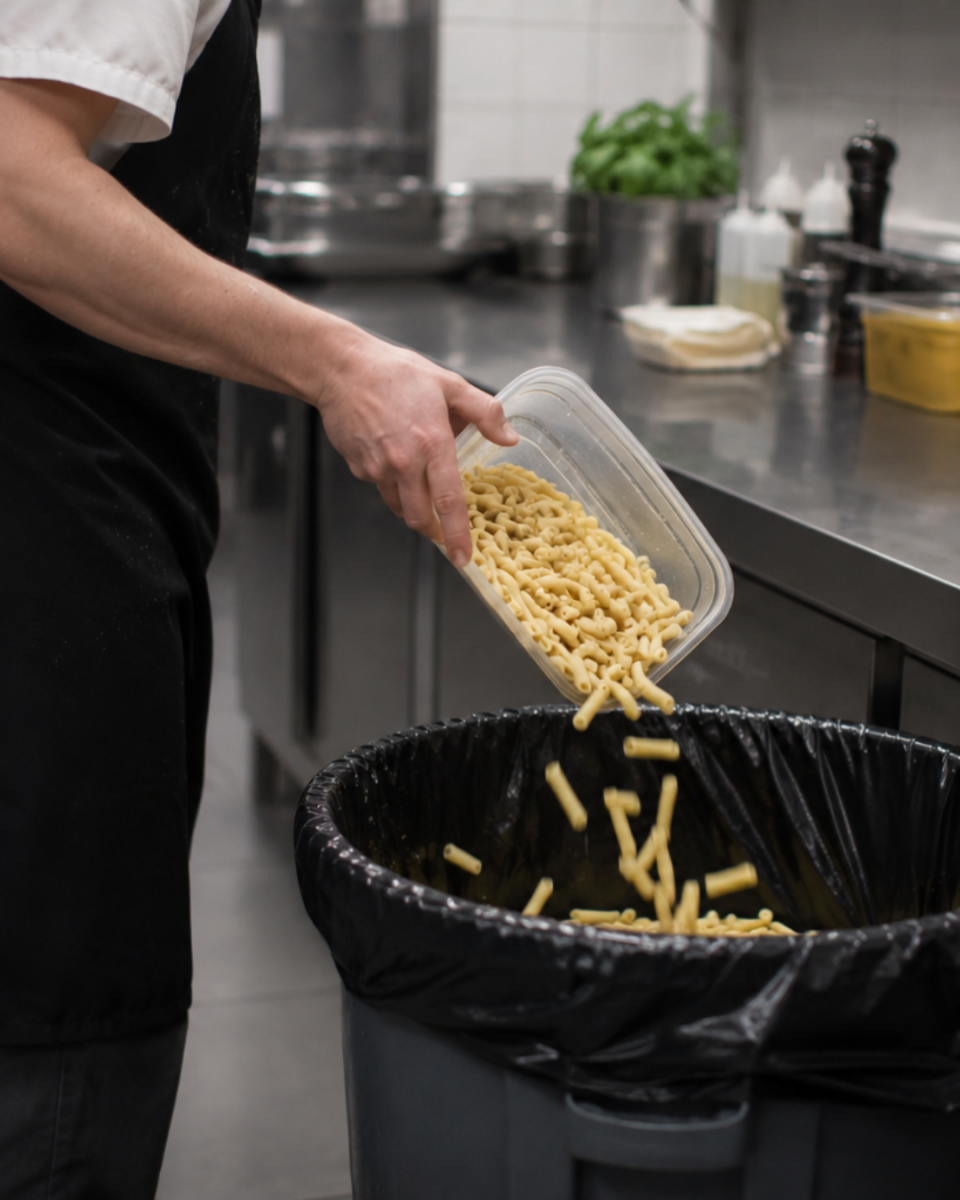
Food waste is one of the biggest, and most underestimated, cost drivers in hospitality. Too much pre-cooked pasta thrown out after service, sauces that sat too long in the bain-marie, or rice prepared in the morning and binned in the evening. Each of those moments hits your margin directly. Yet a large part of that waste is entirely preventable.
The solution doesn’t necessarily start with stricter controls or more supervision. It starts with the products and working methods you choose. With the right base products, you can structurally reduce waste, without putting extra pressure on your kitchen team.
The real problem: cooking based on guesswork
In many professional kitchens, pasta, rice and noodles are prepared in large quantities in advance. The goal is to be ready for a busy service. But it often only becomes clear at the end of the day whether the estimate was correct.
More guests than expected, and you risk running short. Quieter than anticipated, and prepared products remain that can no longer be used.
Quality also deteriorates. Pasta stored for hours loses its structure and bite. What was meant to save time regularly ends up causing quality loss and food waste.
Pre-cooking dry pasta: more steps, more risk of loss
Professional dry pasta is often pre-cooked to speed up service. That seems efficient, but in practice it requires a lot of preparation. The pasta needs to be cooked precisely, rinsed immediately with cold water and then mixed with oil to prevent sticking. After that, it must be covered and refrigerated, then reheated again during service.
Every extra step demands time, water, energy and attention from the kitchen team. Quality loss can occur at multiple points. Pasta cooked too long goes soft. Insufficiently cooled pasta can stick together. Too much oil affects how the sauce clings. Long storage reduces bite and freshness. And when demand was misjudged, the surplus ends up in the bin anyway.
What’s meant as preparation for a fast service also creates extra work and a greater chance of loss.
With fresh frozen pasta, you skip the pre-cooking entirely
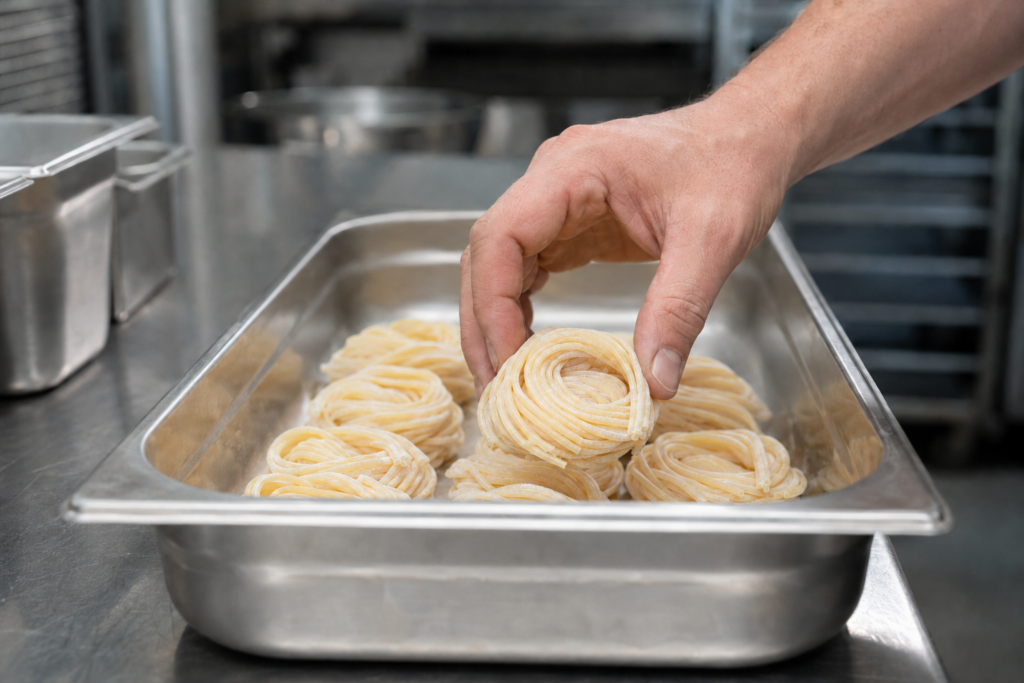
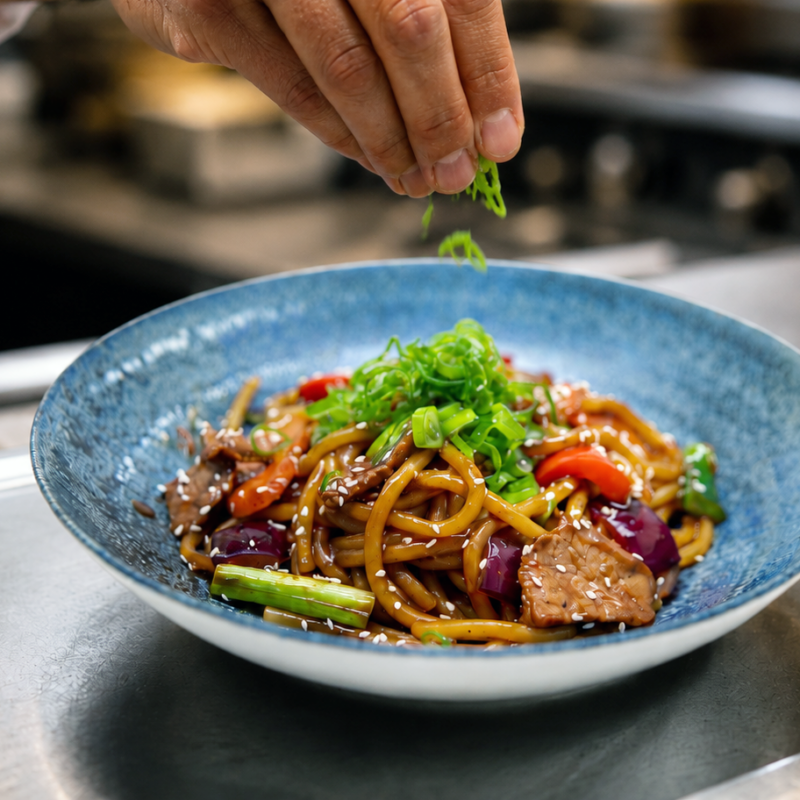
The pasta from Smiling Cook is already perfectly pre-cooked and individually deep-frozen. You no longer need to cook, rinse, mix with oil or store it in the fridge hours in advance. You take directly from the freezer what you need and regenerate only the quantity that was ordered. Depending on the type of pasta, that can be done in hot water, a steamer, a pan or a suitable oven.
This offers clear advantages in the professional kitchen:
- No pre-cooking process
- Less preparation and fewer handling steps
- Fast regeneration during service
- Exact portioning based on actual demand
- Consistent quality and doneness
- Fewer leftovers and better-controlled food cost
This shifts the way of working from estimating in advance to preparing based on actual orders. That relieves pressure on the team during mise-en-place and limits waste at the end of service.
IQF stands for Individual Quick Frozen. Every piece of pasta, every pasta nest and every grain of rice is frozen individually and quickly. This means you take exactly the quantity you need from the freezer at any given moment. It avoids large blocks that need to thaw first and full GN trays that have to be prepared in advance.
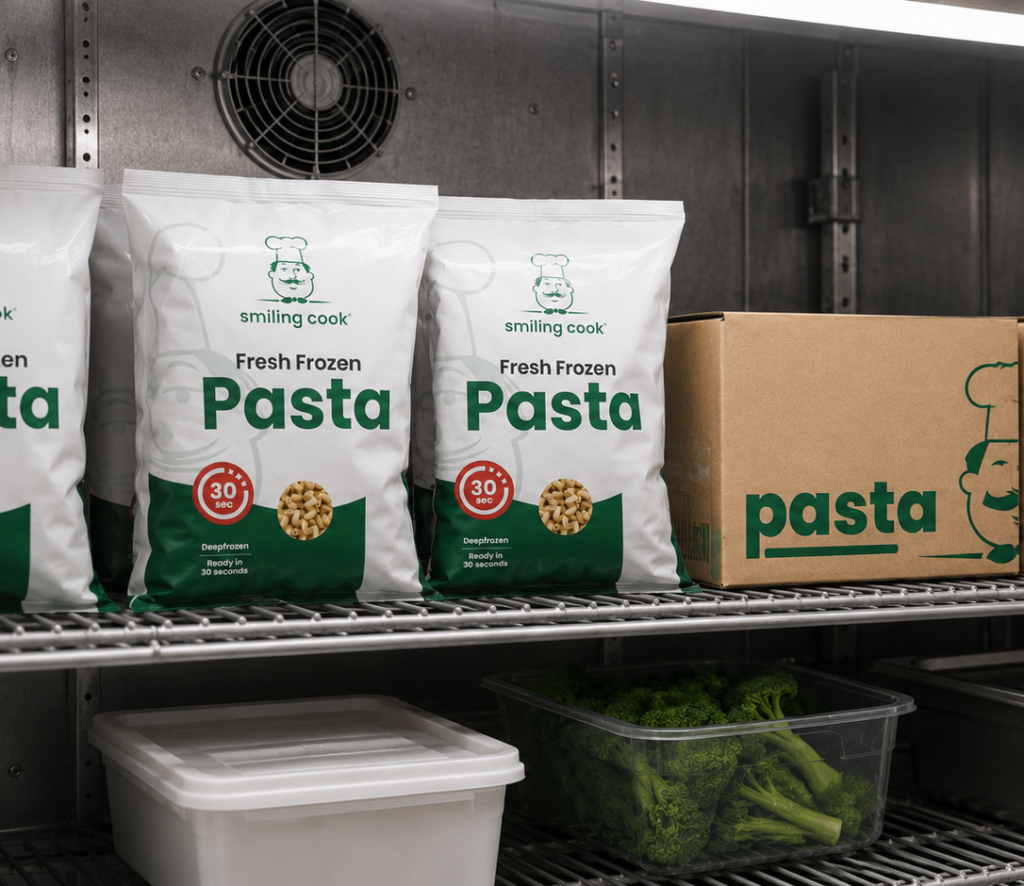
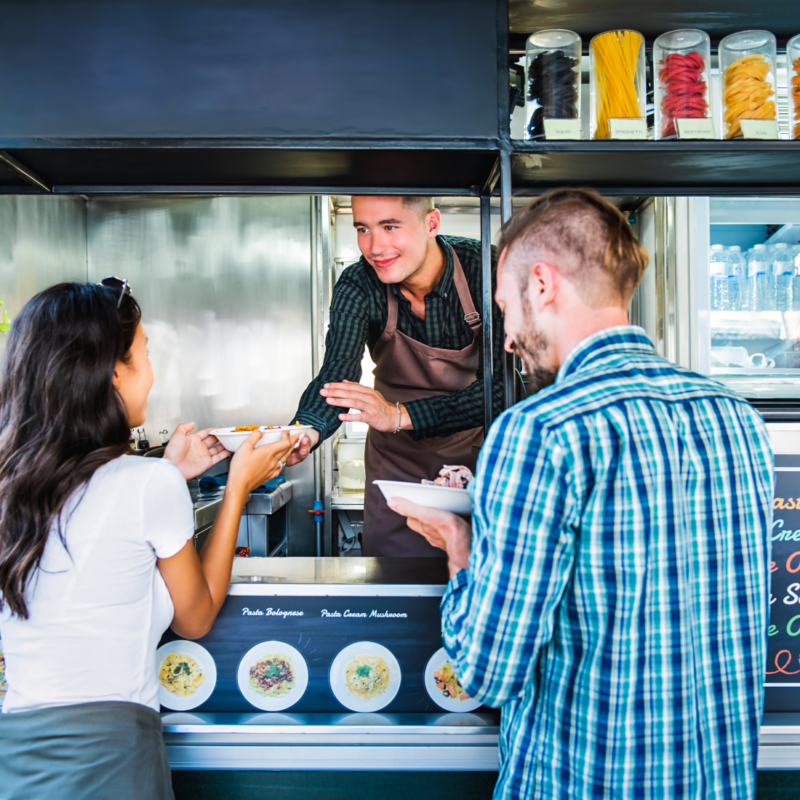
More guests than expected? Quickly regenerate extra portions. Quieter service? The unused product stays in the freezer for the next service. This way you prepare based on actual demand and restock only when needed.
Sauces: long shelf life and flexible in use
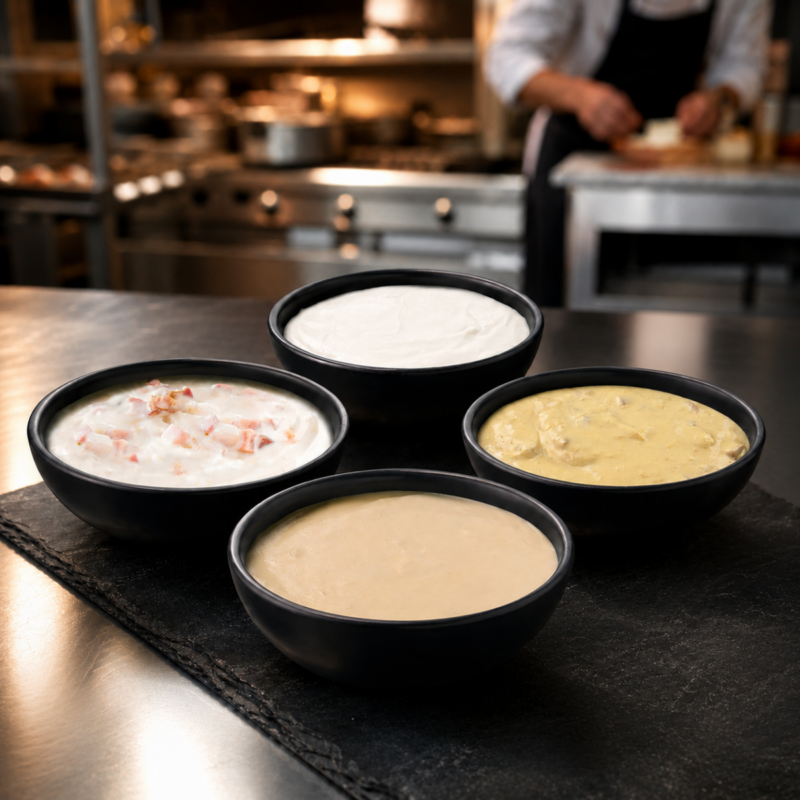 Waste doesn’t only come from pasta, rice or noodles. Sauces also cause unnoticed loss. Think of fresh sauces that stood too long on the heat, large packaging only partially used, or opened products forgotten at the back of the fridge. Individually these seem like small amounts, but over weeks and months the costs add up quickly.
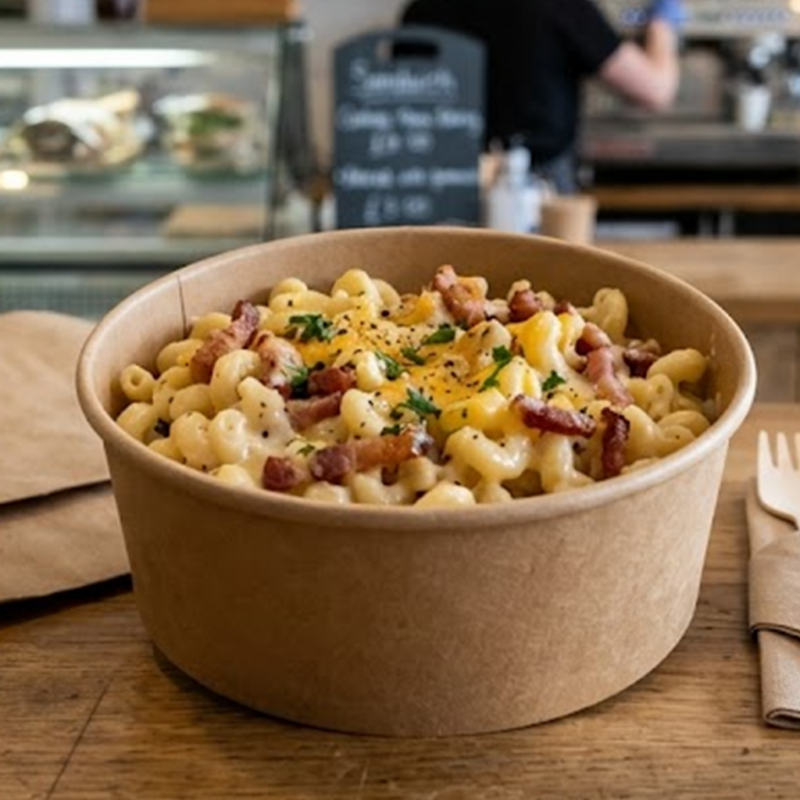
The sauces from Smiling Cook have a long shelf life at room temperature when unopened and come in 1 kg doypacks. This allows you to maintain targeted stock without having to prepare fresh sauce every time. After opening, store the remaining sauce refrigerated and use it within the indicated timeframe.
The advantages:
- Long shelf life at room temperature
- Quick and easy to heat up
- Less preparation
- Consistent taste, quality and food cost
Several sauces are also suitable for use in the bain-marie. When a sauce thickens slightly during warming, it can be adjusted, depending on the application, with a small amount of water, milk or cream.
Less waste starts with the right base
Pasta, noodles, rice and ready-to-use sauces help professional kitchens respond better to actual demand. You prepare what’s ordered, restock quickly when needed, and maintain more control over quality, workload and food cost.
Want to find out what this approach can mean for your kitchen?
Get in touch for more information or a personal demonstration